
Playboy Fiction: Crafting Table
The world isn't as it seems.

This story appears in our Summer 2026 issue, on newsstands July 28. Want us to come to your place? Become a member to get digital access to the issue and early access to paywalled content.
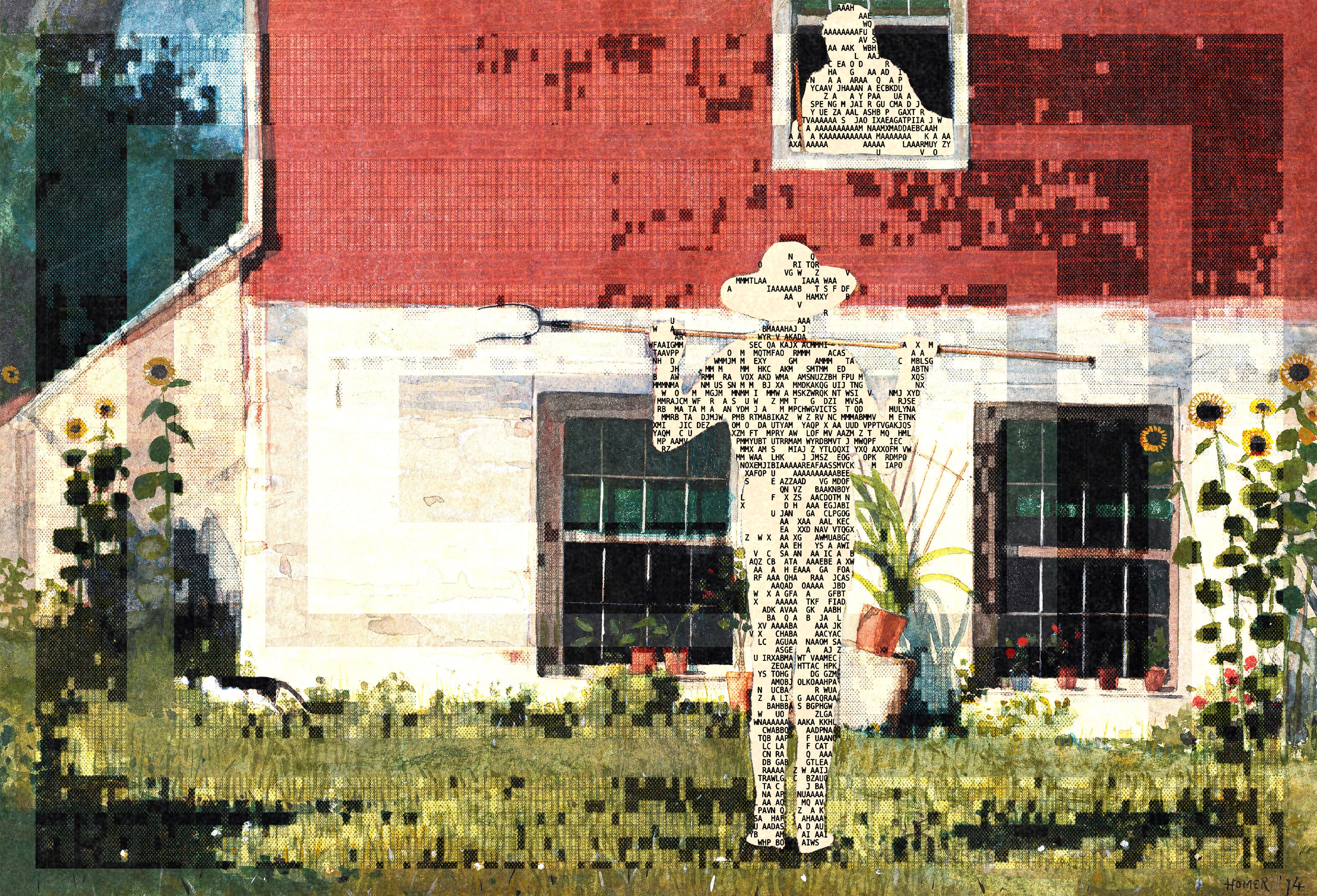
By Nash Jenkins
They spent the afternoon planting wheat. They planted it within the stone walls of the plot behind the house, and what made this work—what made it take the afternoon—was the task of clearing what had been there before: The plot was where the apiary had been, which months earlier they had enclosed within spruce fencing under a roof of oak. The bees had either left or died—either way there was no honey, no honeycomb—and for several months it had sat there as an empty shelter. He’d been busy with other projects, and when they passed by it each morning he made a note to sharpen his axe that afternoon and save the spruce when it was demolished, only to let the other projects take the full day.
They had hacked up the desolate hives and dug up the damp darkened earth where they’d sat to retrieve the hoppers they’d planted there: The hoppers had collected the honeycomb that had fallen from the full hives, passing it down their long sequences to the barrels he’d crafted years before that formed the cellar’s back wall.
He’d been wanting to expand the sugarcane farm, but the apiary had been empty for too long, and its now-silent hoppers could be put to use elsewhere. “You’re always getting distracted when we’re in the middle of things,” River said to him once. “It’s like we start something and right away you get another idea.” He ignored this, though his son was right. He did not tell the boy—whom he still called a boy even now at 14—that this was indeed the magic he found in things. The new world was vacant and its horizon flat and boundless, and the only thing to do was to set out each morning and continue the work of filling it. The magic was how this itself had come to be sufficient as a life and not just a means to it, and how in doing so it distracted him from what otherwise would be fears. Without it, he might step back and give these fears a name. He might see that what for him was magic was for River simply life, and that one day, River might seek a magic of his own.
They would later collect the wheat in their bundles; for now, these bundles held the saplings from the oaks along the shore and the husks of black flint from the cavern beneath it. There was only so much inventory they could carry, and before setting out each morning they went down to the cabin’s cellar. Things were safer here at night, and because sometimes their days went long, they took with them each morning only what the day’s work required.
“Is there still mutton?” River asked him as they threshed the land. “In the cellar. Do we have any left?”
He stopped threshing and turned to look at his son. Most days they worked in silence, and it was moments like this that felt arbitrary and cruel in how they suddenly returned him to the world left behind. You gonna cry? his own father had said to him once in the car; he couldn’t recall where they’d been going, only that it had been after dinnertime and he said from the backseat that he was hungry. The magic he found in the work—in the planting of wheat, in the mining of ores, in the sorting of their inventory into barrels for the things it would go on to build—was in how it kept at bay what was no longer: things like Applebee’s and passports and Hampton Inns; things like roommates and coworkers; things like fatherhood. Most of the time, there was a luxuriousness to their impossibility. Like these other things, fatherhood as a concept had been nullified with the end of the old world, requiring as it did the presence of homes and yards beyond one’s own to differentiate a family from those who were not in it.
River did not look up from the plot of earth he seeded after he asked the question. In the facelessness of his son’s stout shape he felt something inside himself dislodge and tremble, and as he looked at his son they were suddenly back in the old world, more tactile but less vibrant. River did not know what dinnertime was, or breakfast or lunch; they ate before work and after. His son did not have a name for hunger as a concept, or for fear, or for anger: This was by design. When he saw in River an awareness of these nameless things, he found himself returned to what had been abandoned. He had learned in these moments to pause, to will himself to remember that they were the lucky ones.
“Yes. There is some mutton left.”
The world as river knew it was 17 years old. He had come to refer to what preceded it—and his father had never really corrected him—as “before I was born”: Under the benign narcissism of childhood, all of history (or at least modernity) is rewritten and compressed into the infinitely expansive and infinitesimally compressed moment of vacant blackness that precedes their own arrival. It’s how he would have been taught in school that the universe itself had been born, were there such a thing as school.
“We’re safer now.” This was what River’s father had told him when he was old enough to understand that the world as he knew it was not the world as it had been.
The world was still light when the last squares of dirt were seeded with wheat, so before returning they retrieved their fishing rods from the chest by the cabin door. As they’d finished planting in silence, he’d thought of how his father had looked at him when he asked about the mutton, and tilling the last of his land he found himself seized with something sickly and vicious, something that made the vacant flatness of the world feel distant and unreal. And as they stood on the banks of the lagoon and cast their rods for fish, these were the feelings that gave form to the question he had asked many times before. He knew it was not to be asked here, and he did not grasp that this was why he asked it.
“The world before I was born—was it a lot like this?”
He asked this question aware that there was an offense in it. He did not know the word afraid for what it seemed to awaken in his father, but he had sensed it before: at night, mostly, when they returned from the world and the shape and color of things became realer. Sometimes his father screamed in his sleep.
His father did not answer, but that evening when they retreated from the world, he pulled out a box from beneath the ladder. It was different than the barrels in the cellar: Its edges were softer and paler, its texture and weight present in his hands. On the side of the box were red shapes; he did not know they were called letters, and that letters formed words, and that these words read OfficeMax.
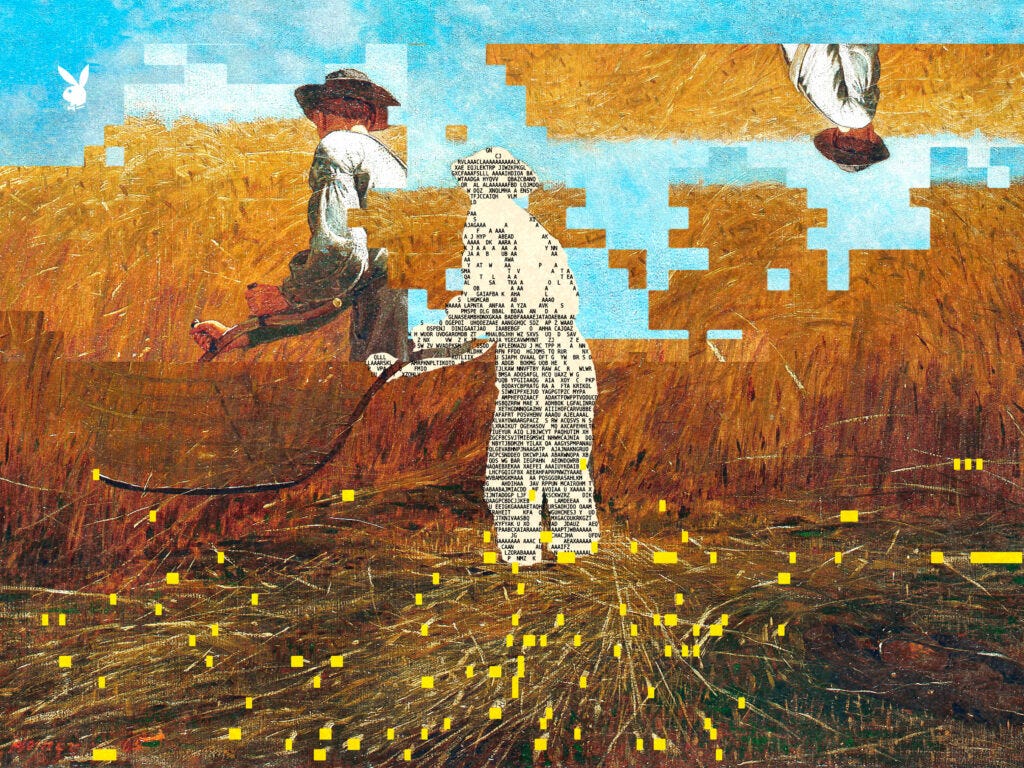
Inside this box were many pages, and upon them were images. In their details and shadows these images looked like what River saw through his own eyes, except these images lacked what River may or may not have known was called color. “It wasn’t like this. We’re safer now.” His father smiled as he watched River look down at the images, and River understood without understanding that his father meant for him to be frightened by what he saw in them.
In fact, they conjured in him a feeling he did not know was called longing. For one, in these images there were other people. As far as he knew—and his father had told him this was true—he had never seen another person, only his father. The people in these images looked like his father, but the strange ways in which they didn’t made him want to stare longer at them. There were many of them in a single image. Their faces were contorted, their mouths agape, the sky behind them swallowed in smoke and flame. Some of them were crying. (He knew what it meant to cry.) Some of them lay on what looked like thin white beds; they seemed to be asleep.
Some looked more unlike his father than others. Their hair was longer, their bodies leaner. Something about their faces was kinder. He did not know the word woman. In one image, one of these people lay alone, their leg broken at a strange angle; their mouth was open and their face looked wet with something dark. Their clothes were ripped; their naked stomach was softer than his father’s.
River wanted to look at this image for longer than he had wanted to look at the others. He felt a strange tension in his pants, and he realized that his penis was growing firm. This happened sometimes, in the mornings, and when it did his penis looked like his father’s, but this was different: When his father pulled the image away River had an urge to take it back and look at it longer. He asked his father who the person was, and his father replied.
“What does that mean?” he asked his father.
“What does what mean?”
“She.”
His father said it meant nothing, and River went to sleep thinking about She. With time, she left his mind, and when the strange happy fizz in his brain and his loins went away, it was replaced with fear as his mind returned to the other images. What frightened him was the world as it looked before he was born. The shapes in it were familiar but not. There were many houses that weren’t their own—bigger, too close together. What scared him was how they looked not like the world outside their house but the world inside it.
It was in the darkness after his father climbed up the ladder that River returned to the box. River had learned years before to climb the ladder so it would not creak, to hold things up under the thin square of light betrayed by the trapdoor’s sealed edges. It was beneath the pages inside that his hands met the edges of a smaller box, and the cold metal of something he knew was a lock. He remembered the key he’d found one night several years earlier, taped beneath one of the ladder’s rungs. It was still there, and with a strange tensing he retrieved it.
Within the smaller chest were more pages. In the gray half-light he saw they contained the characters he didn’t know were called letters, small and black and in neat even rows. On some of these pages there were also images. Unlike those in the larger chest, there were only three people in these. The one who appeared most often was very small, his face very round and his hair very light.
In others there were two people, side by side. One of them looked like his father, though his hair was shorter, and something about his face made River feel strange and heavy in a way that his father’s did not. So did the face of the person next to him. At first River thought it was She, and at first he felt his penis begin to harden again, but he knew somehow he should not be feeling this way about this person.
He looked at this person for a long time, and later in bed he found this person in his thoughts. They smiled at him, and he felt safe. They said things to him whose meanings he did not know.
Over the next three days, he and his father went out to the woods with their axes. They had the spruce they had saved from the apiary walls, but his father thought they needed more. So they chopped the trees and collected wood, and as they did this River was silent. In his mind was the person from his nighttime thoughts and the strange words she had said to him. There was something about the strange sound of them that made them hard to push away, even though his father often told him to push strange things away, just as his father himself seemed to want to push away things that did not belong to their world. He tried but could not, and he did not know the word beautiful, but he knew that the words made him want to cry.
“You’re quiet today,” his father had said as they returned through the woods to their cabin.
“What is Ethan?” he had asked.
And suddenly the world receded, and there before him was only his father.
“What did you say?”
He allowed himself to say it again, to make realer the strange shape of the word in his head, and when he said it again—Ethan—his father began to strike him. After this he would remember that he had cried as he told his father that the person in his head said it. His father’s face was red, contorted like the faces in the images he’d showed him, and as he beat him he had said, “You’re lying—you’re lying.”
The next day they went out into the world again with their axes to collect more wood.
His name had been Kevin. At night, when he shut the trapdoor behind him and found himself on the precipice of the world left behind, he was aware that it still was.
His parents had died two years before life in the new world began. His father had been sick for several years, and in a different way his mother had been sicker for longer; three months after the leukemia killed his father, he received a telephone call. He did not receive many calls, and so he’d answered, and after confirming that Kevin was Kevin, the officer on the other line told him that his mother had been found in her garage by a neighbor. Kevin’s parents had been 40 when he was born, and afterwards—as his father lamented bitterly—there could be no more; seven weeks after the officer phoned him, he received a second phone call, from a probate attorney, informing him that everything left or sold was his.
He kept working in fitful half-shifts at Best Buy, even though he no longer needed to. He started in Appliances, and for a year he demonstrated the programmable digital screens on Maytag washing machines before finding it in himself to approach Sylvia in the break room. Sylvia was Store 3481’s assistant manager, and though she smelled like cigarettes, the pity with which she looked at him was kinder than what the world provided him otherwise. She told him about strange viruses in Africa, and radiation in their water, and the camps the government was building in Alabama for when the rebellion came; he began to read about these things, and eventually he would know the truth of these warnings. “I—I was wondering if I could be moved to Gaming.” She was eating egg salad, and after chewing and swallowing she looked at him. “You got experience with games?”
“A lot.”
The only birthday party he ever had was his 10th. It had been his mother’s idea—his father had left the house for the afternoon with a look of silent revulsion—and sometime years later he would recognize the cruelty of it: of her lighting candles and bringing the ice cream cake to the table where he sat alone; of leaving the eight other Dixie paper plates and corresponding party hats set around the table once it was clear there would be no guests to claim them. With a leer she had told him to make a wish.
At a quarter ’til four the doorbell rang. When he opened the door he saw Peter Reeves, who got off the school bus at the same stop. He was staring at his Reeboks; 10 feet behind him like a sentry was Peter’s own mother, her lips pursed, clutching the invitation she’d found buried in the garbage. “Happy birthday,” Peter had muttered, shoving the present into Kevin’s chest, not looking at him as he turned.
That night, when his parents went to bed, Kevin went to the Compaq PC in the living room. This was where his father spent his days since being laid off by State Farm the previous winter, doing something he called day trading. On the CD-ROM in the box he removed from Lego wrapping paper were the words SimCity 4. Create and control your own empire! the loading screen beckoned, before taking him to a hilly peninsula, where he was asked to name his new city. Kevin’s World, he typed.
By his 16th birthday he had constructed 419 cities across 22 region maps. The largest, Mountonia, had a population of 3 million across hills connected by a series of monorail lines. He kept his urban areas clean of the dirty industry he relegated to neighboring cities, connected by freeways he laid. Does anyone else have backstories in their heads for their cities? KEmmerich posted on GameTalk.net/SimCity4 that year.
When Mountonia surpassed the population of Chicago, the game began to lag. One night it took several seconds to lay a line of freight rail. He stared at the screen for a long time, and then he clicked to the Natural Disasters button on the left-hand panel. He dispatched the first meteor to the airport, which glowed blindingly white and then left a square of scorched earth where it had stood. It took nine meteors in all to reduce the city to rubble; the ticker in the screen’s corner informed him that the population was now 471.
Five weeks later he had come home from school. He’d spent the day contemplating the grid of water pipes he’d finish laying under New Mountonia, but when he entered the living room he found his father sitting at the computer. Its screen was blue, with the words Fatal Error blinking in small white text, and his father was clicking with frantic haplessness as if it would restore what was lost. When he heard Kevin’s footsteps, he turned to his son, and they stared at each other for a long time. “Fucking—faggot—freak,” his father had said, and with a screwdriver he pried open the CD-ROM tray, removed the disc, and snapped it in two.
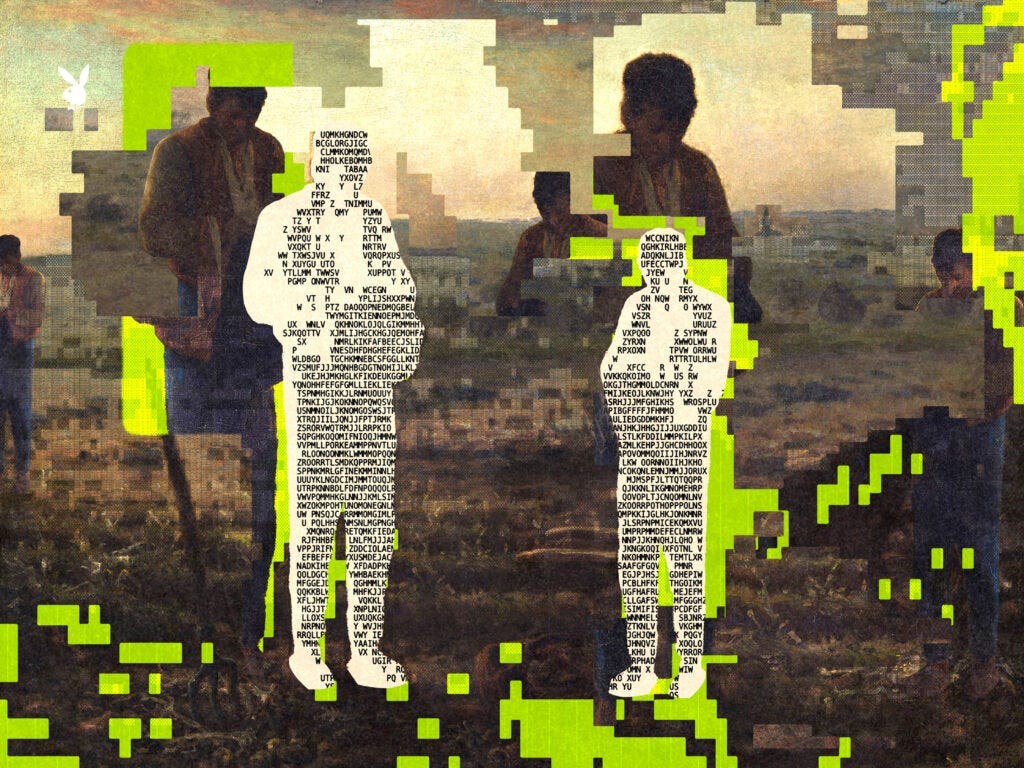
The world that River and his father went out into did not look like where they returned to at the end of the day. The colors in the world were brighter, and touching things in it was different: In fact there was no touch at all, only the occasional spasm of the device in his hands when he fell, or when the zombies came and struck him; unlike when his father struck him, it did not hurt, though he knew it was supposed to. His father, too, looked different there: Like the rest of the world around him, his father’s shape there was simpler, formed by the squares that constituted him. Sometimes he looked over onto his father’s screen and saw what he looked like, and it scared him that he looked that way too.
“We’re going to mine for iron now,” his father said to him when the last of the oak they had hewn was in the barrels, which could carry more than they would appear to. “What about expanding the sugarcane farm?” River asked him, and the question was sincere. He had stopped thinking about the images in the chest. “We need pistons for the sugarcane farm, and we need iron for the pistons,” his father said, and together they retrieved their pickaxes from the tool barrel and set out for the cavern.
For the rest of the day they mined iron, breaking the stone of the cavern’s deepening walls until the ingots tumbled out and bobbed before them. It was a productive day—the iron barrel would be nearly full—and as they stepped out of the cavern into the late afternoon light River allowed himself to speak again.
“Is this real?”
“Is what real?”
“The world.”
His father looked at him. “Do you think it’s real?” he said.
There was something about where they returned to after work that he did not like, but he did not know why. Unlike their cabin in the world, it had no windows, no cellar, and no attic; unlike the light from their cabin’s windows or the empty wooded world beyond it, the light was white and harsh. Here there was no mutton, no apples, and no trees beyond the door to pluck them from; indeed there was no door, only the ladder and the trapdoor above it. Sometimes his father came down the ladder carrying small parcels with characters that formed what he did not know were called words: Doritos; Ritz Bits; Hershey’s Kisses. The word food was the word for the mutton and apples that populated the inventory bar at the bottom of his screen when he stepped into the world each morning; these realer things he knew only as the things his father brought.
“Yes,” his father said back finally. “It’s real.”
Gametalk.net’s moderators had opened the site’s Minecraft subforum in the summer of 2010, a year after the first players set out to homestead their worlds. “There are 18.4 quintillion possible worlds in Minecraft,” the game’s founder had said in an interview with IGN.com that autumn. “Each is literally infinite, randomly generated by an algorithm for the player. Each player occupies this world alone.”
Sylvia had moved Kevin to Gaming that winter, and for the first two weeks she supervised him. She filled the midday lulls by telling him what she’d done to prepare herself for the world to come: the days fairly soon when no knock on the door could be trusted, which was why she’d removed her address from the postal service’s delivery list; since then she’d been undisturbed. You oughta do it too, she told him, just as a pretty young pregnant woman approached them, seeking gift advice for a nephew. “You gotta get to know the new big games,” Sylvia told him afterwards. “Be familiar with the systems.”
KEmmerich’s first post on GameTalk.net/Minecraft appeared two months later. My name is Kevin and I’m trying to discover what this whole Minecraft thing is about :)
It was the boys who asked him about Minecraft, boys who had cleaved away from fathers browsing dishwashers or antivirus software and made their way over to Gaming. At first they had frightened him. He had arrived at school the Monday after his 10th birthday party to find a laughing Peter Reeves standing before a gaggle of his friends and giggling girls: “I could see in the kitchen window and not a single person came!” But these boys were different: They liked him, and they stared and nodded with wide eyes at what he had to say, and sometimes a few weeks later he’d see them again, passing by Gaming as they followed their fathers to Printers or Wearable Tech, and with nervous happiness they’d wave and say, “Hey, Kevin!” At first he recoiled at the looks their fathers gave him, but with time he learned he could simply pretend they weren’t there.
By the following summer he was posting to the forum several times a day. His profile identified his world’s identifying number as 489352872817. I am thinking about getting started on multiplayer with someone who’s never played, he wrote in June 2014. Any tips for getting them hooked?
It was around this time that he saw the pretty blonde pregnant woman who had come looking for a gift for her nephew. She was no longer pregnant, and in the stroller she pushed was a small blond baby; the footballs and dinosaurs on his onesie told Kevin he was a boy. The boy was asleep the first time Kevin saw him, but when he saw him in the months thereafter he wasn’t always: Other times he would be looking out from the stroller with wide blue eyes, entranced by the dance of the plasma screens along the store’s walls. Once, as Kevin returned abandoned shopping carts to their stable in the parking lot, he watched his mother load the boy into a car seat in a red Honda CR-V, singing to him as she did.
The first time Kevin saw the woman’s husband was also the first time he heard the baby cry. The husband had cropped fair hair and wore a pressed golf shirt that strained against his pectorals, and he replied to his wife’s chatter with single syllables. They were heading to Mobile Phones, but as they passed Gaming the baby in the stroller lobbed a small rubber zebra out onto the floor with one fat arm, and then began to wail.
Kevin watched the father’s face tense and seem to pinken as he brought the stroller to a stop. His wife was already up ahead, happily oblivious, and only Kevin was near enough to hear the words of his quiet exhalation.
“Jesus Christ, Ethan,” the father muttered.
Seven months later, not long after Thanksgiving, Kevin would use his employee discount code at Best Buy for the last time, purchasing two iPads. A week after that was when he would stop showing up for work. That was the week he would follow the red Honda CR-V to a Target in a neighboring shopping center, where the mother would leave the boy alone in the cart in the cosmetics aisle to dart back to Women’s Clothing for a pack of athletic socks. It would be nearly Christmastime then, and she’d tell herself that the crowdedness of the store made it safer.
But that was seven months away. This particular afternoon was in springtime, and the boy was in shorts, his fat little legs kicking in anticipation as Kevin kneeled low to pick up the rubber zebra. It had bounced slightly against the linoleum. He looked up at the boy’s father with what the man would undoubtedly receive as a sympathetic smile. Kevin retrieved the zebra, and as he handed it to the boy, he looked keenly at him and leaned close, so that only the child could hear.
“You look like a River,” he said. “And I bet you’d like to go on an adventure.”
Yummy!
We have some erotic fiction too.
VERY sensual and vivid comic on kickstarter currently funding.
Get a piece of the action while you still can!
www.readhoneysuckle.com